
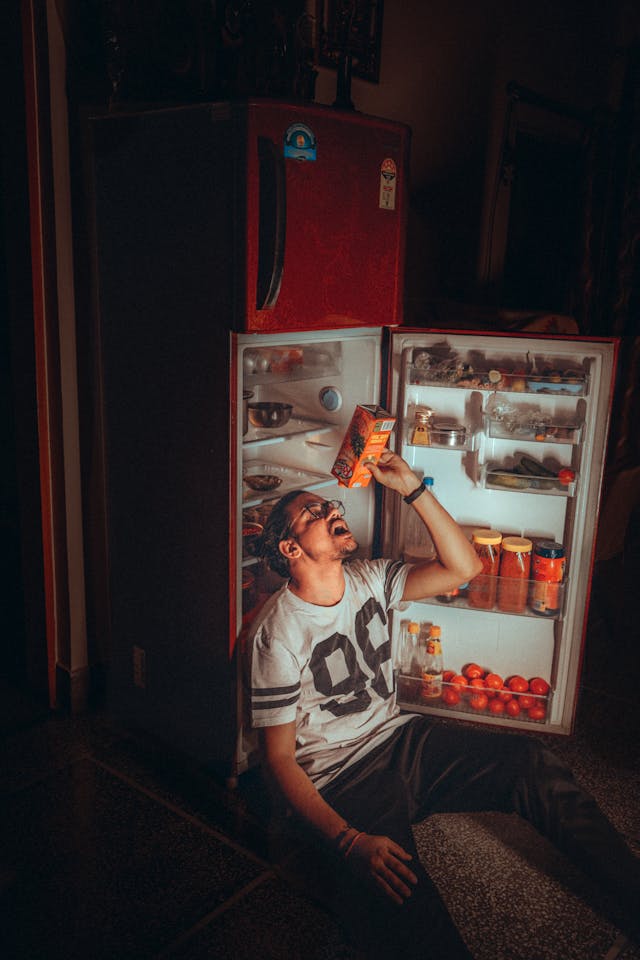
It’s 10:30 p.m. The house is quiet, the kids are asleep, and for the first time all day—you finally have a moment to yourself. You walk past the kitchen, and there it is… that whisper. “Just one snack.” Maybe it’s a handful of chips, a cookie, or a spoonful of ice cream. You tell yourself it’s harmless, but deep down, you know this has become a pattern—one that leaves you waking up bloated, guilty, and frustrated.
But what if I told you that late-night snacking isn’t really about hunger—it’s about exhaustion, emotion, and unmet needs?
Let’s uncover what’s really driving those nighttime cravings and how you can take back control—with grace, not guilt.
1. Understand the Real Reason You’re Snacking
Most late-night eating isn’t physical hunger—it’s emotional relief.
You’re not craving food. You’re craving peace after a long, draining day. The silence, the snacks, the comfort—it feels like your reward for surviving another chaotic day.
The fix? Start by asking yourself this simple question before you reach for food:
“Am I hungry, or am I tired, stressed, or bored?”
If the answer isn’t hunger, give your body what it’s actually asking for—rest, calm, or comfort.
2. Close Your Kitchen—Physically and Mentally
Late-night eating is often about accessibility. You see it, you eat it.
Create a mental and physical boundary:
- Set a kitchen closing time—for example, 8:30 p.m.
- Clean up your counters, wash dishes, and turn off the lights in the kitchen.
- Pour yourself a glass of water or herbal tea as your signal that the eating part of your day is done.
This simple ritual helps your mind detach from food and ease into rest mode.
3. Fix Your Daytime Eating Patterns
Most nighttime cravings are born from undereating during the day.
If you skip breakfast or lunch, your body’s going to fight back later with powerful hunger signals.
Here’s how to stabilize your energy and prevent nighttime binges:
- Eat balanced meals with protein, fiber, and healthy fats.
- Don’t go more than 4–5 hours without food.
- Keep healthy snacks like Greek yogurt, nuts, or fruit during the day—so you’re not ravenous at night.
Remember, willpower doesn’t fail you at night—your energy balance does.
4. Create a “De-Stress Transition”
Many moms snack at night because food becomes their decompression tool. Instead, build an evening unwind ritual that doesn’t revolve around eating:
- Take a warm shower and change into cozy clothes.
- Journal your thoughts to release mental clutter.
- Stretch or do 5 minutes of gentle breathing.
- Watch a light show or read something uplifting.
By replacing “snack time” with “me-time,” you retrain your brain to associate calm with comforting habits, not calories.
5. Keep a “Snack Journal”
Awareness is power.
For one week, write down when and why you crave late-night snacks. You might notice patterns—like you snack more after stressful days, arguments, or skipped meals.
When you see the triggers, you can predict and prevent them.
Change begins with understanding, not restriction.
6. Make Healthier Nighttime Alternatives Available
Sometimes, you genuinely are a bit hungry—and that’s okay. What matters is what you choose.
Stock up on easy, satisfying options like:
- A protein shake or smoothie
- Greek yogurt with berries
- A boiled egg or handful of almonds
- A small bowl of oatmeal with cinnamon
These choices stabilize your blood sugar and prevent that “crash and crave” cycle that makes you wake up sluggish.
7. Go to Bed Earlier
One of the most underrated fixes: sleep.
The longer you stay up, the hungrier you feel—not because your body needs food, but because sleep deprivation spikes ghrelin (your hunger hormone) and lowers leptin (your fullness hormone).
Aim for a bedtime that supports your energy and metabolism. Rest isn’t laziness—it’s strategy.
8. Reprogram Your Mindset
If you slip up, don’t label yourself as weak.
Breaking the late-night snacking habit isn’t about perfection—it’s about progress. Every small choice to honor your health is a victory.
Remind yourself:
“I’m not depriving myself—I’m choosing to wake up proud, energized, and in control.”
That’s the kind of power that transforms not just your body, but your mindset.
9. Visualize Tomorrow’s You
Before bed, imagine waking up feeling light, clear, and in control.
That feeling—the pride of following through—is far more satisfying than any midnight snack.
You deserve to rest in peace, not in regret.
10. Make It a Family Value
If your kids see you ending your day with calm and discipline, they’ll absorb that energy too.
You’re not just breaking a habit—you’re building a legacy of mindful living.
Your self-control teaches them balance, your routines teach them structure, and your self-love teaches them worth.
You don’t need to fight your cravings—you need to understand them.
Every time you choose to rest instead of reach, you’re rewriting your story. And that’s how true, lasting transformation begins—one evening at a time.
Disclaimer:
The information on Health Shred is here to educate and inspire, but it’s not meant to replace professional medical advice. We encourage you to check in with your doctor before starting any new exercise, diet, or wellness routine — everyone’s body is unique, and what works for one person may not work for another. Your health and safety always come first!

 HEALTH SHRED
Leave a comment